Kids Don’t Need Facts. They Can Google That Stuff Later…


It was the year 2008. I got my first “smartphone” (a Samsung). I couldn’t believe I (and everyone else with a smartphone for that matter) had the internet (and social media) at my fingertips! What a momentous occasion! Around the same time, I also started substitute teaching. In 2007, I graduated from ISU with a degree in Communication. I didn’t like where I was working or what I was doing (a marketing job in the city). So, I started subbing to make extra money and ended up LOVING it. 

When I got my own classroom, technology and phones were even smarter (and more affordable)! My students started getting their own smartphones (most of the time, their phones were better and smarter than mine!). Educators began contemplating how to incorporate smartphones into the classroom/learning. In addition to the 1-1 initiatives some districts were implementing, educators embraced a more financially friendly trend: Bring Your Own Device (BYOD). If districts/schools allowed it, students used their own devices for learning and research purposes while in class.

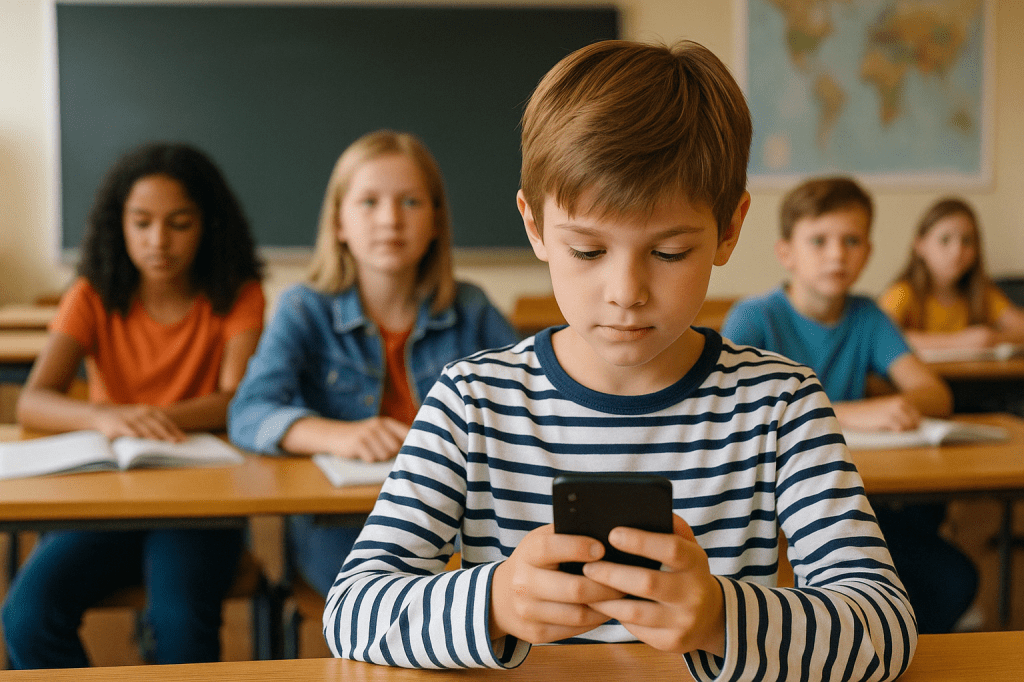
This trend was the impetus for a new and popular idea for learning: “Kids don’t need to know facts/dates/names/etc. They can just google that stuff later.” For many educators, this idea just made sense. Some saw this as a way to maximize learning efficiency in their classrooms, “We don’t have to spend time on fluffy facts. We can focus on teaching skills. Then, kids can apply those skills in all content areas across the board.” However, this idea was NOT backed by research. But, like other popular education theories not backed by evidence or research, it felt good. It felt freeing. It felt logical. It felt like educators could leave out fluffy facts and focus on skills.   

Today, during my morning commute, I listened to a podcast on Natalie Wexler’s book, Beyond the Science of Reading. During the episode, Wexler obviously talked about the science of reading. But, she also talked about the science of learning and how writing connects to both the science of reading and the science of learning. She also talked about some common misconceptions regarding learning and what the evidence really says (I’ve added some for emphasis):

  • Kids don’t need facts because they have Google: Actually, kids desperately need facts and knowledge. The more factual information and prior knowledge students have stored in long-term memory, the more efficiently and effectively they can learn new things. 
  • Kids just need skills: Actually, 1.) skills aren’t always as easily transferable from one domain to another  2.) skills like critical thinking depend heavily on a person’s prior knowledge in a subject. Both ED Hirsch and Natalie Wexler talk about how critical thinking cannot be taught effectively without first ensuring that students possess sufficient background knowledge. 
  • Writing in for reading and for learning: When it comes to reading, I always say, “If students are reading about it, they should be writing about it.” When it comes to learning and cognition, when we write, we are actively retrieving information we have stored in long-term memory and then putting it into our own words. Super powerful stuff! 
  • Equity: Most educators know that students from disadvantaged backgrounds come to us with far less experiences and knowledge than their peers in wealthier settings. In fact, research suggests that students from low-income families hear approximately 4 to 30 million fewer words than their peers from higher-income families. Same applies to facts and other knowledge. Leveling the playing field requires that families and schools create environments that promote meaningful conversations and language interactions with young children. 
  • Technology in learning: Technology is a POWERFUL tool (AI is evolving and changing the way we do things every single day. I used AI to generate the image for this blog). Students should use technology in school. But, as educators, we have to help them use it the right way. Students MUST engage in the arduous writing process in order to reap the learning benefits associated with writing. 

Any other common learning misconceptions come to mind? Let me now! 

The STEM Challenge Conundrum: Learning and Making Meaning Through Interactive STEM Challenges

DISCLAIMER: I LOVE STEM! I was a cofounder of a STEM school. I spent summers developing integrated project-based learning (PBL) curricula for the school. I procured computer coding and Project Lead the Way engineering curricula for those students. My doctoral dissertation focused on STEM (specifically, challenges facing upper level female undergraduate engineering students). I LOVE STEM!

All that said, I can’t help but be somewhat critical of the “STEM Challenge” craze currently gripping schools throughout the nation. I’ve observed this craze all over Pinterest, Teachers-Pay-Teachers, and at teacher stores like Lakeshore Learning. Again, don’t get me wrong. I’m sure STEM challenges garner high levels of student engagement. It seems STEM challenges also really pique student interest. Yet, that’s not what concerns me regarding STEM challenges. I’m focused on the actual learning that occurs while students engage in STEM challenges (currently, I can’t find any research on this. Maybe it’s still too new).

I once participated in a STEM challenge a teacher was conducting with her students in her classroom. She distributed the directions, gave the students a bunch of supplies, and then told them to accomplish the task clearly delineated in the directions. Like I said, as I watched and participated, there was no denying the high levels of engagement and interest. Later that year, I was presenting at the International STEM Education Association Conference in Branson, Missouri, and I sat in on another STEM challenge presentation. This teacher did THE SAME EXACT THING. Obviously, two teachers (out of the millions who probably conduct STEM challenges with their students) who conduct STEM challenges the same exact way is NOT generalizable. However, that got me thinking… What learning (if any) is actually occurring during these STEM challenges?

Applying what I know of cognitive psychology and cognitive load theory (which, admittedly isn’t a lot), I’m attempting to better understand and articulate how students learn (or don’t learn) during STEM challenges. First, let’s briefly discuss a basic premise of cognitive psychology. Knowledge is stored in long-term memory (LTM) and new information is processed in short-term memory (STM). When considering learning and problem solving, for people who have the necessary information stored in LTM, it’s easier for them to bring that information into STM and manipulate it to make sense of newly received information.

Cognitive load theory suggests that our working memory capacity has inherent limits. Many cognitive researchers posit that our STM can only hold seven plus or minus two units of information at a time (some people can hold and manipulate up to nine units of information while others can only hold and manipulate up to five units of information in STM). When excessive cognitive load exists, it creates error or some kind of interference. So, for people who don’t have the necessary information stored in LTM, asking them to manipulate a variety of supplies and simultaneously learn new content and concepts may be excessive cognitive load (i.e. STEM challenges).

This may then suggest that students, depending on the capacity of their STM and how much knowledge they have stored in LTM, would only have space to possibly manipulate some of the supplies, rather than also learn the new content and concepts associated with a STEM challenge.

I always refer to this in my integrated PBL presentations and when talking about other constructivist approaches to learning as well. If students don’t have the necessary information already stored in LTM, and they’re being provided with too many units of information during a STEM challenge (being given a variety of supplies, being asked to learn new content, and being asked to understand new concepts), they may be experiencing cognitive load which could be hampering their learning.

I’ve heard from some teachers that they like to engage in a KWL or anticipatory set in order to gauge prior knowledge before starting a STEM challenge. I think this is definitely a good way to start a STEM challenge. However, I’m very interested in empirical research about learning using STEM challenges. Know any? Please share!

Like/Comment/Share! I’d love to hear from you!

Human Cognition and Implications for the Constructivist Classroom

In light of Brain Awareness Week (March 13-19), I thought I would write about the brain!

With the development and increased usage of the FMRI (functional magnetic resonance imaging), I find myself reading more and more findings regarding human cognition and neuroscience. It has also become a major interest of mine. That being said, while analyzing study findings, I find myself in a state of excitement, discovery, and uncertainty. The more I learn about human cognition, the more I question current best practices, educational trends, teaching strategies and approaches, etc.

In the context of direct instructional guidance as it relates to human cognition, learning is defined as a change in long-term memory. Kirschner, Sweller, & Clark (2006) posit:

The aim of all instruction is to alter long-term memory. If nothing has changed in long-term memory, nothing has been learned. Any instructional recommendation that does not or cannot specify what has been changed in long-term memory, or that does not increase the efficiency with which relevant information is stored in or retrieved from long-term memory, is likely to be ineffective. (p. 77)

Based on my readings and knowledge regarding human cognition (which is admittedly limited), I find that these cognitive researchers often sound very definitive when talking about learning. However, for me, questions continually abound regarding their claims or evidence. For instance, can Kirschner et al. safely conclude that absolutely no learning has occurred if nothing has changed in long-term memory? Again, for me, that sounds very definitive.

Kirschner et al. further posit that controlled experiments almost always demonstrate that when students are dealing with novel information, they should be explicitly shown what to do and how to do it (sounds somewhat like lots of hand-holding). If they are not, students may experience an excessive cognitive load that is detrimental to learning.

As an avid and vocal proponent of project-based learning, I always get a little nervous while reading and analyzing cognitive studies that decry constructivism or constructivist teaching approaches. I’m not denying the results of these cognition studies or the plethora of literature reviews concerning human cognition that suggest that direct instructional approaches are more effective and more efficient.

However, with well-designed and well-planned project-based learning, students are provided with a real-world problem and (often) a pathway or guidelines to follow in order to solve the problem (therefore, possibly alleviating the “problem-solving search” that has been shown to deplete working memory). Well-designed PBL is highly structured and organized by skilled teachers. Students are guided through the journey as they endeavor to meet project deadlines, secure resources for their projects, practice and prepare for presentations in front of authentic audiences, and receive and reflect on critical feedback. When done well, and when students are truly engaged in these endeavors, though it may not be considered a “direct instructional approach” or “direct instructional guidance,” PBL can have profound learning impacts on students, right? I’ve seen it happen. Or, is what I’ve seen simply increased levels of engagement and excitement regarding learning activities? Is what I’ve seen simply students engaging in meaningless activities that look good, but will not transfer to long-term memory alterations? Cognitive studies often rock educational foundations. As such, these are turbulent times for me as I grapple with this information.

Human Cognition and the Case for Early Childhood Education.

Also, as we become more informed about human cognition, I can’t help but think about its implications for early childhood education. Based on what I’ve read and what researchers have found, a substantial amount of information stored in long-term memory is essential for continued and future successful learning. If this is the case, I don’t see why early-childhood education is not mandated (I’m sure most people will resort to the argument that there’s not enough funding for it). I live/work in Illinois. Students don’t have to go to school until they’re 6-7 years old (first grade). In underserved communities, it’s highly likely that if students are not attending school during those foundational years, they are not building experiences necessary to form and fill long-term memory. By the time some students come to us at 5 or 6 or 7 year olds, they may have missed a copious amount of opportunities to build their long-term memory.


What are your thoughts? I’d love to hear from you! Feel free to follow/share/leave a comment!