Blog

AI in Schools: Tools to Support, Not Substitute, Great Teaching

While scrolling insta the other night, I came across the story of Derek Li, a Chinese entrepreneur who removed his sons from traditional schools and is experimenting with AI-led education (says a lot about my social media algorithm). These kinds of posts and inquiries make me angry (and fearful of Skynet). I immediately started thinking, “Can algorithms truly replace the human teacher? Can education become more efficient, or even more effective, by replacing teachers with algorithms?”

To be clear, there are many areas where AI can help make education more efficient (and maybe more effective): creating learning progressions based on the standards, lesson planning, scheduling, brainstorming ideas, communications, possibly even tracking student progress (without using student names or other identifying information). But the idea of replacing teachers with AI, indeed anxiety inducing, is misguided and oversimplified. Because, as most educators know, at the foundational level of all effective learning are relationships, connections, emotional and social development, and human judgment… all the things no algorithm can reliably replicate.

What AI Can Improve

When it comes to education, AI can play a strong supporting role in the following areas:

  • Lesson planning & content generation: AI can assist in structuring units, generating ideas, adapting content to different levels.
  • Administrative and scheduling tasks: Freeing teachers from logistical burdens so they can focus more on teaching.
  • Feedback loops and assessment data: AI tools can help identify gaps, track progress, offer drill-practice or adaptive learning. 
  • Curriculum Writing, Alignment, and Improvement: In recent workshops, I’ve seen presenters use AI to identify essential standards, generate learning progressions based on those standards, and then eventually develop guaranteed and viable curricula. 

These are valuable efficiencies. But, more than anything, they are support functions. In no way are they a substitute for what good teachers do or bring to the classroom on a daily basis. 

Why Teachers Matter

Replacing teachers and the human element of school with AI overlooks very important dimensions of good education:

  1. Social-emotional development & relationships
    • Before students can engage deeply with academic material, many other needs must be met (safety, connection, belonging, emotional regulation, etc.). Some call this “Maslow before Bloom,” or “relationships before rigor.”
    • Teachers see more than content delivery. They often recognize when a child is dealing with stress, trauma, anxiety, or other outside-school pressures. These sociocultural factors (family situation, socio-economic status, identity, culture) massively influence brain development and subsequent learning.
  2. Mentorship, modeling, moral/character development
    • Teachers are mentors, role models, means by which students learn not just facts, but how to think, to work with others, to manage failure, to persist.
    • Human presence allows for empathy, adapting to nonverbal signals, trust (features that algorithms will always struggle to replicate).
    • I’ve seen a similar model where the ed tech entrepreneur uses “guides” to help facilitate some of the “connection” within a normal classroom. I have lots of questions about this and would be interested in seeing the data on its effectiveness. 
  3. Collaborative learning, peer interaction, group dynamics
    • Lots of human learning happens in social, group settings. Students learn from one another; discussion, debate, and working in teams foster deeper understanding. If students are spending most of their time interacting with machines/screens, those peer and human interactions may be limited, reducing the benefit of collaborative learning.
    • John Hattie’s meta-analyses show that collaborative and cooperative learning have moderate effect sizes (collaborative learning = .40/cooperative learning = .55). VISIBLE LEARNING+2VISIBLE LEARNING+2
  4. Long-term, holistic outcomes
    • Many qualities we deem necessary for functioning as a citizen in society, including social responsibility, creativity, resilience, and kindness, are nurtured through human relationships, interactions, and shared experiences. Algorithms can’t do that. 
    • Also, there’s still limited evidence on long-term effects of full AI-led schooling: what about emotional well-being, social skills, creativity, ethics, fairness, bias, etc. — all areas where human teachers are crucial both for guidance and oversight.

Risks & Downsides of Too Much Technology and Overreliance on AI

Most parents can probably attest to ways technology has changed their child/children. To that point, new research shows some startling effects technology (and social media) can have on children: 

  • Mental health, attention, screen time, social comparison
    • In The Anxious Generation, Jonathan Haidt argues that the rise of smartphones and social media and a lack of play and human interaction with others correlates with increases in anxiety, depression, self-harm among teens, especially since around 2010. He links these changes to what he calls the “phone-based childhood,” which displaces in-person interactions, free play, and unsupervised activity. Wikipedia+2New York University+2
    • Other risks include sleep loss (and its subsequent effects), attention fragmentation, addiction to the stimulus of screens, social comparison, and loneliness. Unplugged Canada+2New York University+2
  • Reduced opportunity for embodied, real-world learning
    • Learning that involves physical presence will always be hard to replicate with AI, including interacting with other students, hands-on work, field projects, and labs.
    • Play, social games, imaginative play, risky play, and collaborative projects are foundational, especially for younger children. 
    • Also, Hattie’s list considers “technology with high school students” to have a smaller effect size than human relational or instructional strategies. VISIBLE LEARNING+1
  • Bias, equity, fairness, cultural context
    • AI systems are designed by people and trained on data; they can and do embed biases. Currently, they’re not very good at picking up cultural or individual differences, or responding sensitively to them.
    • Also, would this reliance on AI/algorithms widen equity gaps because not all students have equal access to technology or robust internet/devices? 
  • Screen fatigue & disengagement
    • Students may be less motivated if too much is mediated by screens. Authentic human feedback, encouragement, peer interaction often drive motivation more than automated systems.

Conclusion

AI is powerful. It’s smart. And there are things it can do to make many parts of education more efficient. But efficiency alone is not enough. If we lose what makes education human, including relationships, empathy, belonging, and social learning, then we risk undermining learning, not enhancing it.

While we find ways to integrate AI into our daily practices, we must always remember that there’s no substitute for great, human, in-person teaching. Because in the end, good education is not just about what students learn, but also about who they become. Teachers, not algorithms, are the way we get there. 

Kids Don’t Need Facts. They Can Google That Stuff Later…


It was the year 2008. I got my first “smartphone” (a Samsung). I couldn’t believe I (and everyone else with a smartphone for that matter) had the internet (and social media) at my fingertips! What a momentous occasion! Around the same time, I also started substitute teaching. In 2007, I graduated from ISU with a degree in Communication. I didn’t like where I was working or what I was doing (a marketing job in the city). So, I started subbing to make extra money and ended up LOVING it. 

When I got my own classroom, technology and phones were even smarter (and more affordable)! My students started getting their own smartphones (most of the time, their phones were better and smarter than mine!). Educators began contemplating how to incorporate smartphones into the classroom/learning. In addition to the 1-1 initiatives some districts were implementing, educators embraced a more financially friendly trend: Bring Your Own Device (BYOD). If districts/schools allowed it, students used their own devices for learning and research purposes while in class.

This trend was the impetus for a new and popular idea for learning: “Kids don’t need to know facts/dates/names/etc. They can just google that stuff later.” For many educators, this idea just made sense. Some saw this as a way to maximize learning efficiency in their classrooms, “We don’t have to spend time on fluffy facts. We can focus on teaching skills. Then, kids can apply those skills in all content areas across the board.” However, this idea was NOT backed by research. But, like other popular education theories not backed by evidence or research, it felt good. It felt freeing. It felt logical. It felt like educators could leave out fluffy facts and focus on skills.   

Today, during my morning commute, I listened to a podcast on Natalie Wexler’s book, Beyond the Science of Reading. During the episode, Wexler obviously talked about the science of reading. But, she also talked about the science of learning and how writing connects to both the science of reading and the science of learning. She also talked about some common misconceptions regarding learning and what the evidence really says (I’ve added some for emphasis):

  • Kids don’t need facts because they have Google: Actually, kids desperately need facts and knowledge. The more factual information and prior knowledge students have stored in long-term memory, the more efficiently and effectively they can learn new things. 
  • Kids just need skills: Actually, 1.) skills aren’t always as easily transferable from one domain to another  2.) skills like critical thinking depend heavily on a person’s prior knowledge in a subject. Both ED Hirsch and Natalie Wexler talk about how critical thinking cannot be taught effectively without first ensuring that students possess sufficient background knowledge. 
  • Writing in for reading and for learning: When it comes to reading, I always say, “If students are reading about it, they should be writing about it.” When it comes to learning and cognition, when we write, we are actively retrieving information we have stored in long-term memory and then putting it into our own words. Super powerful stuff! 
  • Equity: Most educators know that students from disadvantaged backgrounds come to us with far less experiences and knowledge than their peers in wealthier settings. In fact, research suggests that students from low-income families hear approximately 4 to 30 million fewer words than their peers from higher-income families. Same applies to facts and other knowledge. Leveling the playing field requires that families and schools create environments that promote meaningful conversations and language interactions with young children. 
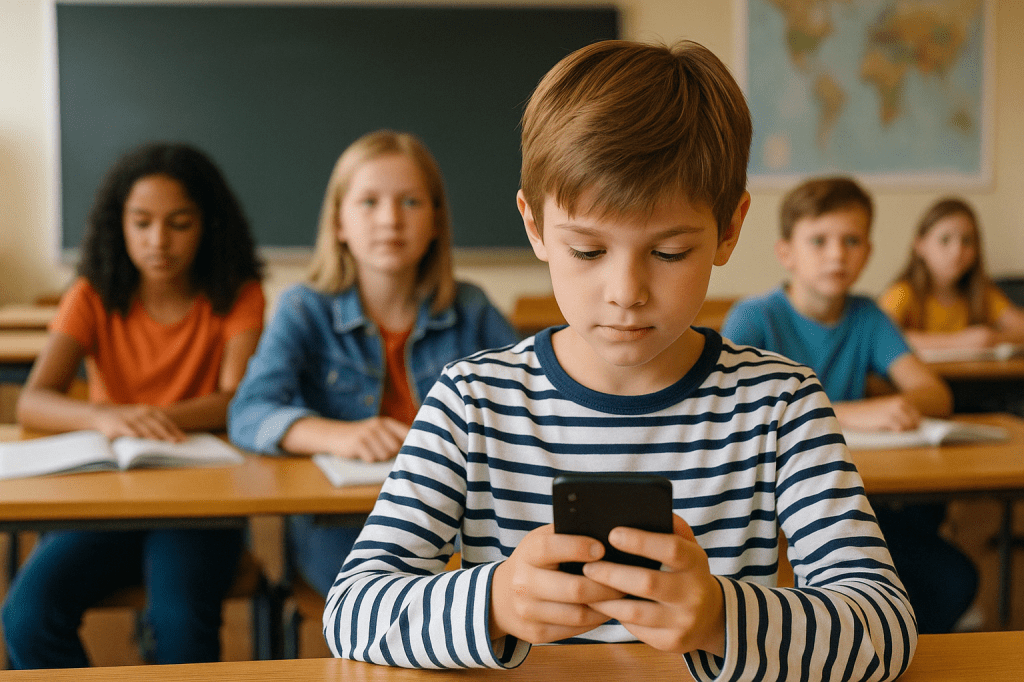
  • Technology in learning: Technology is a POWERFUL tool (AI is evolving and changing the way we do things every single day. I used AI to generate the image for this blog). Students should use technology in school. But, as educators, we have to help them use it the right way. Students MUST engage in the arduous writing process in order to reap the learning benefits associated with writing. 

Any other common learning misconceptions come to mind? Let me now! 

Developmentally Appropriate: Is This Phrase Hurting American Education?

Have you ever heard the phrase “developmentally appropriate” or its inverse, “developmentally inappropriate?” In the world of education, there are lots of phrases and acronyms that non-educators don’t understand (even people within the field don’t understand them all). In my experience, “Developmentally Appropriate” and its inverse are most often used to rationalize NOT teaching or exposing a student to certain content or skills. Most of the time, I hear it uttered with such authority that it shuts down an entire conversation. But, every time I hear it, I have some serious questions regarding its credibility/use:

  • Why do you think this skill or content is developmentally inappropriate?
  • How do you know this particular skill or content isn’t developmentally appropriate? Did you study it?
  • What scholarly and peer-reviewed evidence do you have to show it’s not developmentally appropriate?
  • Who told you this particular skill or content isn’t developmentally appropriate?

It goes on and on. As it turns out, I’m not the only one with these questions. I’m currently reading E.D. Hirsch’s 2020 book, How to Educate a Citizen: The Power of Shared Knowledge to Unify a Nation. In it, Hirsch goes beyond simply wondering and posits, “That phrase, developmentally appropriate practice, pronounced authoritatively, has been a dangerous hindrance to American excellence in education.” Hirsch went on to say that many use the phrase “developmentally inappropriate” to refer to anything seemingly difficult or arduous for a child. He linked its use to the science of reading and how explicit phonics instruction was once deemed “developmentally inappropriate” and “boring.” However, as modern reading research shows, regardless of how seemingly arduous something like explicit phonics instruction may be, it’s essential for developing good readers. Reading this affirmed my wonderings. Hirsch later explained the origins of the phrase “developmentally appropriate” and why we ALL should wonder about its use.

Jean Piaget (1896-1980), a Swiss psychologist known for his work in cognitive development, theorized that children’s thinking evolves through four distinct stages, each stage coinciding with a child’s biological maturation: sensorimotor (birth to age 2), preoperational (age 2 to 7), concrete operational (age 7 to 11), and formal operational (11 years and up). According to Piaget, as children interact with their environments, they go through these very specific and age-related stages of development. Piaget’s work influenced major educational movements and reforms, such as “child-centered learning,” “constructivism,” and “developmentally appropriate instruction.”

Fortunately, as cognitive science evolves and technology used to explore and map the brain advances, a plethora of Piaget’s methods and findings have been refuted. For example, Piaget drew many of his conclusions from an extraordinarily limited sample size, which often included his own children. This raises questions about the generalizability of his findings. What’s more, new evidence suggests that Piaget overemphasized distinct, sequential stages of cognitive development. Brain research shows that cognitive development is actually more fluid and continuous, and children exhibit abilities from multiple stages simultaneously. Finally, Piaget’s findings emphasized universal stages of development that were largely independent of social and cultural factors. However, contemporary research (and what most educators probably already know) suggests that cognitive development is significantly influenced by social interactions and cultural practices.

This raises an important question: If much of Piaget’s work has been challenged or refuted, why do some still use the phrase “developmentally appropriate” as a justification for limiting what students are exposed to? I prefer to think that students are far more capable than we assume, especially when given the right supports. When we default to labeling something as “developmentally inappropriate,” we may unintentionally place limits on learning and restrict access to rich, meaningful content that could help students grow beyond our expectations.

This reminds me of a powerful moment from the classic film Field of Dreams, when the mysterious voice whispers, “If you build it, they will come.” Despite uncertainty, Costner’s character takes a leap of faith, believing that if he creates the right conditions, something remarkable will happen. I believe the same applies to education: “If you teach it, they will learn.” When we raise our expectations and provide rigorous, engaging instruction, students will rise to the challenge. But first, we must believe in their potential and reject limiting assumptions about what they can’t do.

One instructional approach that embraces this philosophy is called “teaching up”, a strategy championed by Carol Ann Tomlinson. Teaching up challenges the idea of differentiating instruction down to meet perceived limitations. Instead, it advocates for designing rich, high-level learning experiences and then scaffolding appropriately so that all students—regardless of background, ability, or previous knowledge—have access to complex, meaningful content. By maintaining high expectations and adjusting supports as needed, teaching up ensures that students are stretched intellectually, rather than being held back by arbitrary notions of readiness.

Obviously, we’re not teaching AP statistics or multivariable calculus to Kindergarteners. Clearly, there’s good reason we don’t teach advanced level math to 6 year olds. But, we do need to be cautious about how we use the phrase “developmentally appropriate” (and its inverse). Rather than using it as a barrier to justify why students can’t engage with certain content or skills, we should approach it as a framework for how we support students in accessing rigorous learning opportunities. If we build high-quality instruction with the right scaffolds, students will not only come—they will thrive.

The “Kennedy Korner!”

It’s INSANE how much the world of education has changed since I last shared a blog post.  I posted my last blog on November 23, 2019.  That was more than two years ago (I’ve been busy…)!  So much has happened since then!  By “so much,” I MOSTLY mean that a global pandemic upended the way we operate.  If you think about it, since March 13, 2020, the world of education hasn’t been and will never be the same again. 

Since that day, in the field of education, we initiated Remote Learning/E-Learning/Virtual Learning (whatever you’d like to call it).  We’ve had virtual meetings and digital professional developments.  We’ve filmed ourselves teaching countless lessons and reading a plethora of books to our students.  We’ve conducted school-wide drive-by parades and other events to help build connections between school and the community.  We’ve even hosted graduation ceremonies via Zoom.  We’ve done a lot to ensure students are still learning socially AND academically while at home during a pandemic. 

Since that day, students and families have obviously experienced a lot as well.  Students and families have faced unprecedented levels of uncertainty and financial stress stemming from unexpected job loss/unemployment.  As a result of the pandemic and subsequent unemployment/financial stress, they’ve contended with increased mobility.  They’ve dealt with unforeseen deaths in the family and sickness/health concerns.  They’ve grappled with increased levels of depression as a result of extended isolation.  Students, in particular, have experienced elevated levels of anxiety to the point where many medical professionals are now recommending anxiety screenings for ALL students by the age of eight!

I think it’s safe to say that EVERYONE in the field of education has experienced a lot during this pandemic.  Unfortunately, it hasn’t stopped there.  We continue to adapt to these changes and experiences, even as we emerge from the pandemic.  While planning to bring ALL students back to in-person learning for the 2021-2022 school year, it was obvious there would be lingering issues and effects from the pandemic.  I knew that one of those issues would be heavily multifaceted; the serious lack of social interactions.  The facets of that SINGLE issue are as follows (not an exhaustive list):

  • Students not knowing how to properly and safely interact with one another
  • Diminished problem-solving skills, especially in social settings
  • A decrease in communication skills
  • Increased levels of social anxiety and a loss of coping strategies
  • Increased instances of trauma resulting in elevated levels of anxiety and other issues

In August, we welcomed students back to full, in-person schooling. These students have gaps in BOTH academic AND social learning.  Personally, I was and still am more concerned with the gaps in social learning.  That’s not to say that I’m unconcerned with their academic learning loss since the onset of the pandemic.  I am.  However, I firmly believe that, unless we FIRST address the social learning loss and the lingering effects from social learning loss, we will have a harder time addressing the academic learning loss. 

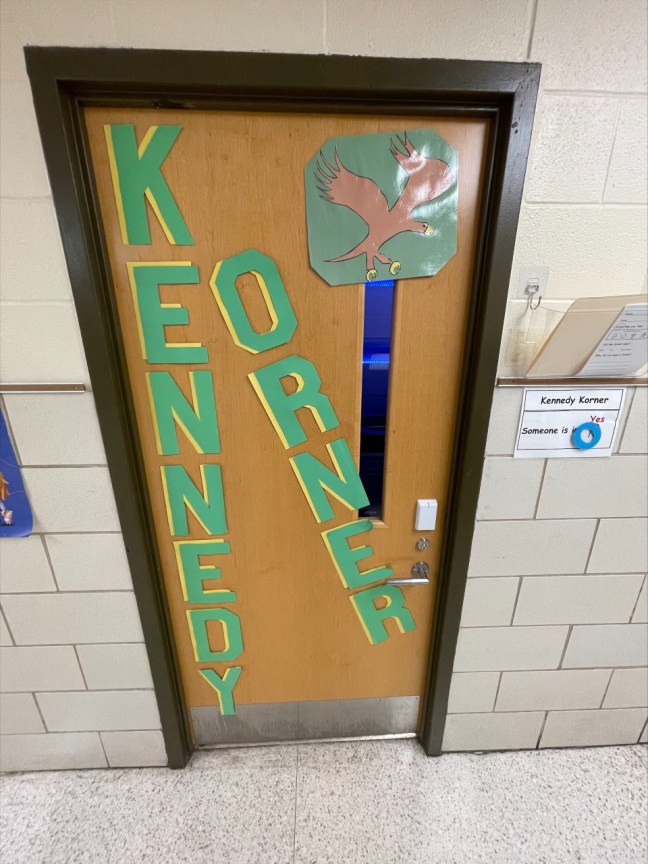
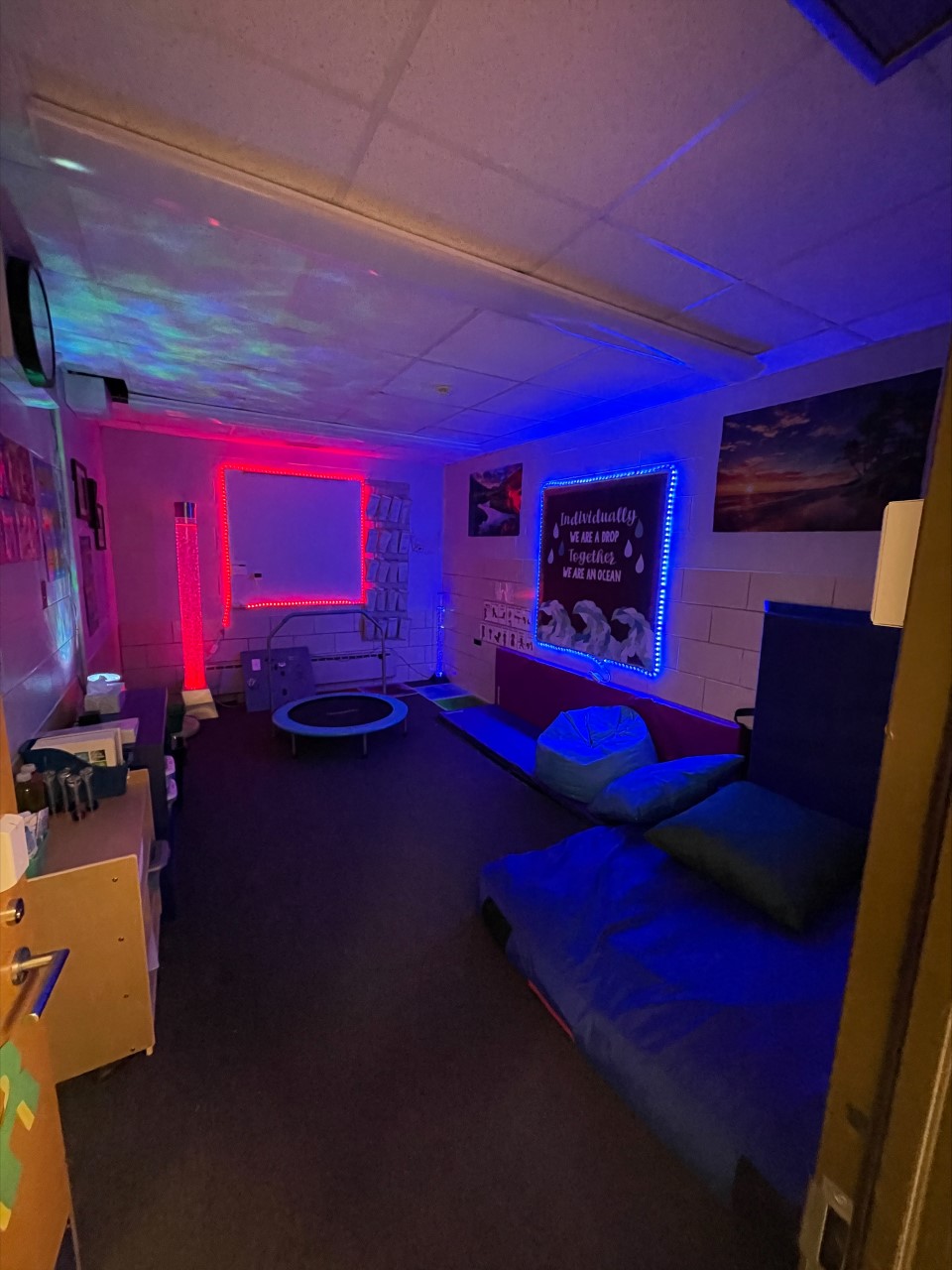
At Kennedy School, members of my special education department and I decided to focus particularly on trauma and anxiety resulting from the pandemic and isolation.  One way we’re helping students process their anxiety and trauma is through the opening and implementation of our “Kennedy Korner.”  Essentially, the Kennedy Korner is a calming space where students can go to de-escalate, refocus, and re-center.  It’s a place in our school where students go when they feel stressed/anxious/scared/nervous/tired/frustrated/etc.  The Kennedy Korner is full of resources such as fidgets, breathing balls, social stories, zones of regulation visuals, yoga mats and instructions, informational brochures, special lighting, calming music, a trampoline, and a crash pad.  When students enter the Kennedy Korner, a dedicated educator assists them with processing their feelings and using the resources in the room.  So far, it’s been a hit!  Students AND staff love this room!  I use this room REGULARLY to help alleviate some of my own anxiety! 

Moving forward, I’m excited to continue providing students with resources and supports they need to process their anxiety and other emotions.  I think these are important steps as we educate students post-pandemic.  What kind of innovative things are you doing to support students post-pandemic? Like, comment, share away!

Tying Teacher Evaluation to Student Test Scores: The Ongoing Debate

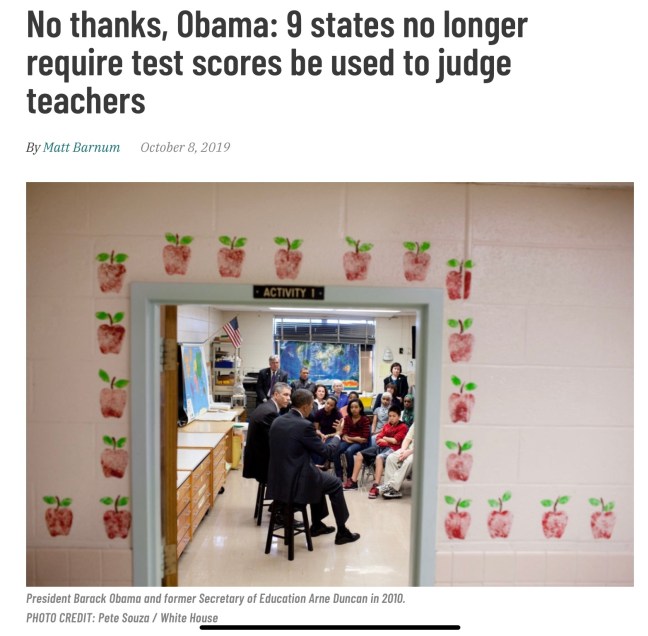
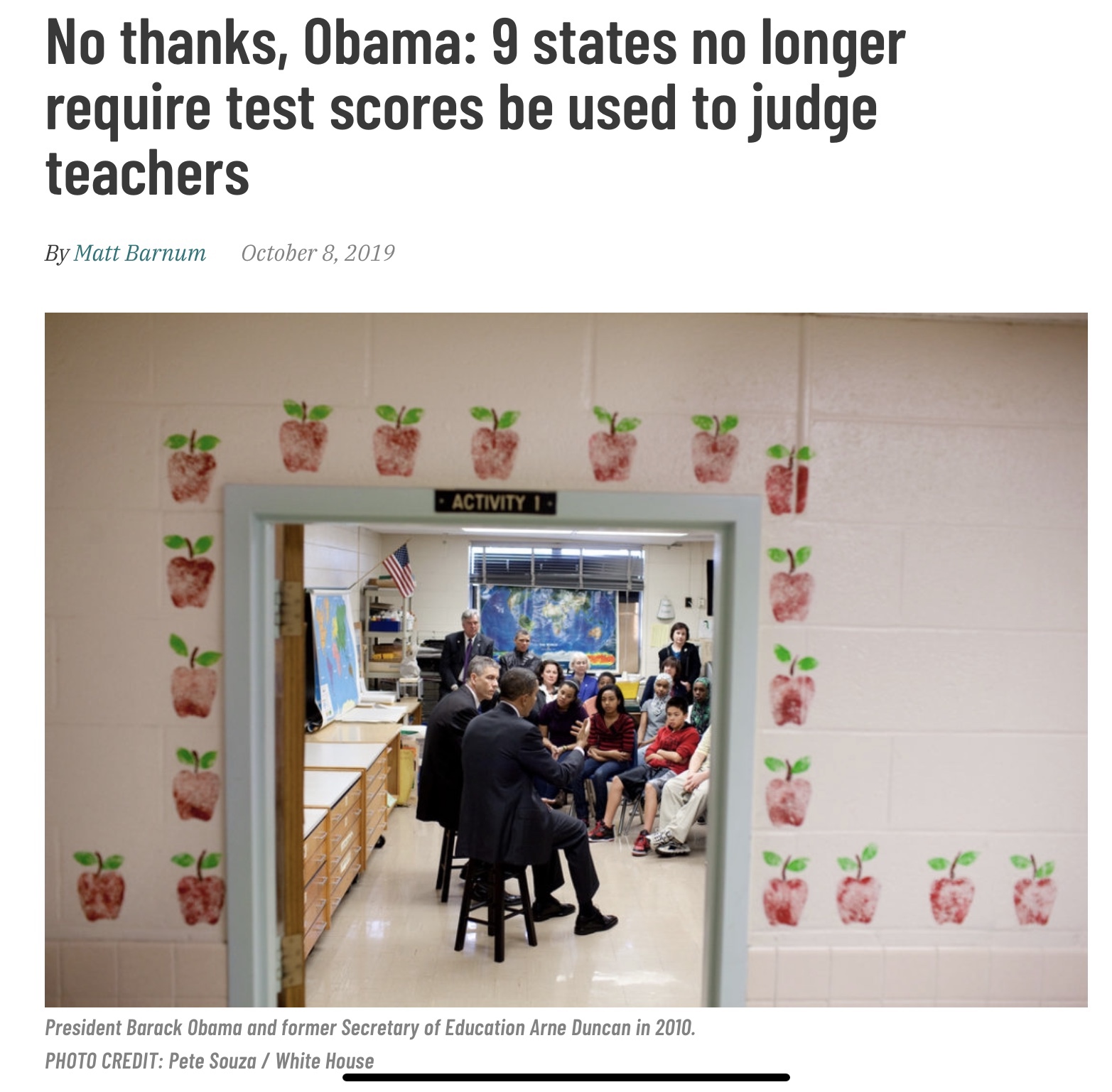
Interestingly, fewer states are including student test scores in their teacher evaluation calculations. As of October 2019, 34 states will use student test scores while calculating teacher effectiveness, compared to 43 states in 2015 (read more here).

In addition to reading the aforementioned article, I recently engaged in a conversation with an advocate of using student test scores to calculate teacher effectiveness. I’m always amused when people say that educators need to be held accountable in similar ways to other professions (ie. The business world). These advocates want some means of measuring teacher effectiveness (as do we all), and equate students to “products” that are churned out at the end of the year. Obviously, we know that human beings are not “products” churned out on a factory belt. But, I’m always perplexed by these proponents. What I find most perplexing is that, the grand majority of the time, people touting/proposing/enacting these kinds of proposals:

    Are not teachers
    Have never been teachers
    Have no experience in PUBLIC education
    Have NO certification in education
    Run some kind of educational “philanthropy”
    See improving education as their “crusade”

I’m no statistician, but neither are many advocates for these types of reforms. I don’t understand how any teacher evaluation system could accurately account for all the variables that vastly impact student achievement (over which educators have MINIMAL TO ZERO control), including but not limited to (just to name a few of the big ones):

  • Poverty
  • Hunger
  • Homelessness
  • Family Mobility
  • Single-Parent Households
  • Parents’ Academic History/Ability
  • Diet
  • Physical Activity/Physical Health
  • Mental Health

I’ve heard that professors at prestigious universities have been trying to quantify and control for these almost uncontrollable variables since the release of “A Nation At Risk” in 1983 (with minimal to no success). I’ve read about researchers developing ridiculous formulas to try and control for outside-of-school factors and then incorporating these formulas into teacher evaluation along with student performance. In terms of actually improving student achievement by tying student achievement to teacher evaluation, the data are inconclusive. Of course, I contend that the reason for this is that these types of evaluation systems do nothing to address the underlying symptoms of student academic performance, or lack there of. “Efforts to improve educational outcomes in schools, attempting to drive change through test-based accountability, are unlikely to succeed unless accompanied by policies to address the out-of-school factors that negatively affect large numbers of our nations’ students” (Berliner, 2015).

Don’t misunderstand me….

• Students should ALWAYS be showing growth

• Teacher evaluation should encompass some type of measurable/quantified measure

I’m NOT saying that because of the issues mentioned above, we should not hold educators accountable. I’m NOT saying that we as educators can’t do things in order to ameliorate some of these underlying issues. THAT’S NOT WHAT I’M SAYING AT ALL. In fact, much research exists that posits, yes, these out-of-school factors exist, but here are things we can do in our classrooms to help. I am saying that teacher evaluation systems that include student performance as a measure of teacher effectiveness will always be seriously flawed.

I’m interested to see how this trend continues. Clearly, the government plays a major role in these types of educational reform initiatives. Thus, I would say that, unfortunately, future evaluation changes will be the result of a continuously changing and volatile political climate.

Like/comment/share!

How Do You Refuel?

We’re in it, now… It’s “that time of year.” I like to call this time of year, particularly, the month of October, “Shocktober.” Shocktober is followed by “Blovember.” I’m sure you can figure out why that is.

At this point in the school year, we’re all coming to the realization that the school year has indeed started, and we’re working our way into the second quarter. For many, that beginning-of-the-year excitement, the buzz that circulates the school as we get our classrooms/offices ready is starting to wane. Also, not sure if you’ve noticed, but the days are getting shorter. It’s PITCH BLACK out in the mornings. Soon enough, we’ll be driving to work in the dark, and driving home from work in the dark. All of which is pretty depressing. Welcome to Shocktober!

Then, after Halloween passes, we enter Blovember. Maybe you’ve noticed this phenomenon as well. November flies by. With all the school events, parent/teacher conference preparations, and fall break/Thanksgiving Break, November just BLOWS by!

All that being said, I’m trying to think about all the ways I stay motivated during these particularly difficult/trying/crazy months of the school year. For me, in order to maintain balance and motivation, I MUST spend time with family and friends (and my dog!), exercise, eat healthy, make/play music, read (for fun and for work), see movies, and make/enjoy art. All these strategies help me stay fueled up and keep going for my students, teachers, and parents.

I just I realized another strategy that helps me stay fueled up, and it may be one of the most beneficial strategies: connecting with the people who inspire me. While at an educational conference today, I got to see so many familiar faces and meet so many new ones. Yet, the biggest impact came when I ran into my high school Spanish teacher, Mr. Rockaitis! At first, I couldn’t believe it was him! He teaches way up north. What would he be doing at this conference “down south?” But, he reminded me that he lives in the city, which wasn’t too far away. We chatted for a bit. He introduced me to some of his colleagues. I found myself giving him advice on a doctoral program. DEFINITELY never thought I’d be giving Mr. Rockaitis advice! Overall, running into Mr. Rockaitis reminded me of my “why.” I mean, this educator hit me at my core. Besides my Mom, he was the biggest influence on me deciding to become a teacher. His passion for learning and for teaching was contagious. He spread that passion to many, including myself. Though our reconnection was brief, it reminded me of my purpose. It reenergized me. It brought clarity.

As we get to this point in the school year, I think it’s important to remember, this is not a sprint, it’s a marathon. Stay fueled up. We still got a ways to go.

How do you refuel? Like/comment/share!

October House Day Success!

If you don’t know, we’re in the process of implementing a House System at my elementary school (read for more info). We plan to host a House Activity Day once a month. Last Wednesday, we hosted our October House Day.

During the time allotted for our House Activity Day, students and staff in each House created a banner that displayed their House animal and House color. Students and staff personalized the banners by putting their painted hand prints on them. The banners look incredible! Even our superintendent came by and made his mark on each House Banner!

Yet, the thing I noticed most about this exciting day = how palpable the energy was in the gym as I began to introduce the day and lay out our expectations for the activity. It was incredible! Seeing all students sitting together with their Houses, wearing their House colors, doing their House chants… it was riveting! As soon as I walked into the gym, I got goosebumps! They were pumped to be with their Houses, and excited about creating their House Banners! The pride and excitement on their faces was contagious. I loved it!

Since Wednesday, I’ve been reflecting on this experience, and can only imagine how it’s been for our students. I’ve had parents calling me about how they and their children love this new initiative! During arrival/dismissal, I’ve had parents and/or guardians running up to me gushing about the Houses, the animals, and the colors! Teachers and staff have talked to me about how they’re so excited to come to work on House Days because of the reaction they see in their students! At the end of the year, I plan to interview and film students regarding their experiences with the House System, and collect any suggestions they may have for improvements.

So far, it’s been an incredible experience, especially for our kids! I can’t wait to continue with this endeavor!

The House System

So, last Friday, my school waded into new territory. We began the implementation of a House System. If you’ve ever seen/read Harry Potter, you may be familiar with this system. At Hogwarts School of Witchcraft and Wizardry, students are sorted into one of four houses: Gryffindor, Slytherin, Ravenclaw, and Hufflepuff. In these houses, students get together to participate in activities and compete in certain events.

Students at the Ron Clark Academy (RCA) in Atlanta, Georgia engage in a similar system. Students at the RCA are sorted into four houses, which are like unique communities all to themselves. Students join the Altruismo (Black), Amistad (Red), Isibindi (Green), or Reveur (Blue).

At my school, because of its size and number of students, my team and I decided to develop a House System with six (6) different houses. The Houses include the Dolphin House (Blue), Turtle House (Green), Bear House (Black), Wolf House (Purple), Eagle House (Yellow), and the Lion House (Red). Each House has an associated character trait and a particular color. In our Houses, students will meet once a month and engage in a lesson/activity that allows them to connect, communicate, collaborate, problem—solve, and have fun. I will be working with my older students to emphasize the importance of leadership, support, and kindness. I want them to support all the smaller/younger students in their Houses.

Based on my initial research on House Systems, the benefits include:

• Opportunities to connect with different/more staff members

• Breaking down traditional, systematic barriers in our education system associated with grade and age. The House System gives students the chance to meet and connect with students they may not normally have a chance to interact with.

• Building/cultivating more UNITY (which is our school word this year)

• Positively changes/uplifts school culture

• Makes schools seem more personal and connected

• Helps generate a sense of pride in self and in the House

• Cultivates leadership in many students, especially older students

For this adventure to work, you MUST have a highly dedicated team of educators in your building. My team is comprised of educators with a wide variety of expertise: social work, elementary, middle school, special education, curriculum coach, paraprofessional, and interventionist. Luckily, for my school, this team is extremely committed, kind, intelligent, punctilious, open, respectful, resourceful, logistical, flexible, and well-planned. I can’t thank these teachers enough for all the planning and effort they put forth with this adventure!

I’m super excited to see where this new adventure takes us! I’ll continue to update the blog as we progress through this journey!

Do you have any experience with a House System? If so, what’s it been like? I’d love to hear from you!

Restorative Practices for the Win!

This year, I transitioned from a more traditional disciplinary approach to Restorative Practices. As a side note, when I first started this transition, I referred to the approach as Restorative Discipline/Restorative Justice. But, I recently attended a conference on Restorative Practices where the speaker explained that Restorative Practices focus more on relationships/relationship building, as opposed to rules, discipline, and consequences. Therefore, we should refer to them as “practices”, rather than some set of disciplinary procedures to follow.

Initially, I think this is what interested me most about Restorative Practices. I was drawn to the notion that, sure, rules, expectations, consequences, and traditional disciplinary measures help. In fact, I’ve worked with students for whom a detention and a parent phone call home suffice and are the only disciplinary measures necessary. However, as I continue in my career in education and meet more and more students, I’ve noticed that traditional disciplinary approaches and consequences are only a band-aid. Traditional disciplinary measures don’t seek to understand the underlying causes of behavioral issues. In order for me to truly understand my students and the underlying causes for their behaviors, I have to build relationships with them. After all, it’s not the right rules that make a classroom or a school an amazing place to be for kids; it’s the right relationships (Maynard and Weinstein, 2019).

Anyways, things started off slowly with the transition to Restorative Practices. By no means are restorative practices time-efficient. Truthfully, Restorative Practices require more time, patience, and energy as opposed to more traditional disciplinary measures. What is more, the transition is often confusing for both teachers and students. I recall working through an issue with a student in my office who proclaimed, “I don’t want to do another circle. Just give me the stupid detention so I can get out of here.” To be honest, a few students shared this sentiment. Nevertheless, I kept at it throughout the year.

At the end of the year, I received a pleasant surprise from one of the students who so eloquently expressed her disdain for Restorative Practices, particularly Restorative Circles. She’d been in my office multiple times throughout the year. She had difficulty understanding emotions (hers and other students’ emotions) and seeing things through other students’ eyes. At first, I remember her being dead silent during a circle I was facilitating with her and another student. Yet, as we worked through her issues in circles throughout the year, she really started to come out of her shell and express herself. I used different circle techniques and questions to get her to think about her actions from other perspectives. I encouraged her to dialogue with me and her peers about how her actions harmed herself, her friends/classmates, and the school community. In our circles, we analyzed the harm of our actions, discussed ways to repair the harm, and dialogued about how we could prevent future harm. Eventually, she became a leader in some of our circles. Going from not saying anything to actually helping to facilitate our conversations was eye opening for me. She truly began to understand the importance of relationships and their importance to herself and the school community.

On the last day of school, she gave me a card (see the image above). There wasn’t much to the card. However, like I said before, we started out in a pretty rocky relationship. She didn’t like me and she didn’t want to work through her issues in our circles. She saw traditional disciplinary measures as a way to get out of talking and working through her problems with others. But, as we talked and built relationships, she really began to blossom. She built relationships, started to see how her actions impacted others, and began to empathize with her classmates. For me, that’s a big win for the relationship building power of Restorative Practices!

Empathy: We Need It Now More Than Ever

While listening to talk radio over the weekend, I heard an analyst posit that there has been an increase in violent shooter massacres across the world. As a rebuttal to the analyst’s statement, someone called in and asserted that there’s been no increase in these types of situations, just an increase in their media coverage, and that we’re more aware of these situations now because of social media and the 24-hour news coverage cycle.

According to the Federal Bureau of Investigation, there actually has been an increase in these types of events. That being said, no one seems to agree on the root cause of these issues. Researchers, analysts, talking heads, and armchair experts have blamed these massacres on everything, including video games, popular movies and music, traumatic home lives, healthy diet imbalances, mental health issues (which may result from Adverse Childhood Experiences/trauma), etc.

Through my preliminary research, I’ve noted that it’s very difficult to isolate one variable as the root cause of these situations. Granted, in many cases, the perpetrators seem to come from broken homes where they may have experienced some sort of trauma that may have resulted in mental health issues. In no way am I downplaying that explanation. In fact, I agree that trauma and mental health issues probably contribute to the majority of these situations. However, I hypothesize that there’s another issue at play.

In my career as an educator, I’ve noticed something very troubling.   Many students (not all) have serious difficulty understanding someone else’s emotions, coupled with the inability to sense and understand how someone else is thinking or feeling. This is usually referred to as empathy. In my day-to-day experiences with students from a variety of grade levels, I’ve seen that many students don’t grasp the concept. Many students lack the ability to predict/foresee how their actions impact others or how their actions are perceived by others. Often times, they can’t put themselves in someone else’s shoes. They don’t conceptualize that, “Hmm. I wouldn’t like it if someone did this to me, so I probably shouldn’t do it to them.” I don’t know why students seem to lack empathy. What’s happening now that’s causing this major paucity of empathy? I can’t put my finger on it, yet.

Regardless, I try to employ certain practices/strategies/approaches that will help teach/display empathy. For instance, while dealing with behavior issues, I always employ Restorative Practices. For years, Restorative Practices have been touted/advertised as a way to decrease the school-to-prison pipeline, and subsequently decrease crime and other issues. Restorative Practices emphasize how our actions can harm our relationships with others and our community. While using these practices with students, we focus on our actions, the consequences, and how members of our school community feel as a result of our actions. Not only do we focus on the way our actions harm relationships, we brainstorm and implement solutions that help repair said harm.

What other ways can we inculcate our students with empathic dispositions? I know some schools have social-emotional curricula. But, I’m just looking for ways throughout my everyday interactions with students where I can help teach and model empathy.