AI in Schools: Tools to Support, Not Substitute, Great Teaching

While scrolling insta the other night, I came across the story of Derek Li, a Chinese entrepreneur who removed his sons from traditional schools and is experimenting with AI-led education (says a lot about my social media algorithm). These kinds of posts and inquiries make me angry (and fearful of Skynet). I immediately started thinking, “Can algorithms truly replace the human teacher? Can education become more efficient, or even more effective, by replacing teachers with algorithms?”

To be clear, there are many areas where AI can help make education more efficient (and maybe more effective): creating learning progressions based on the standards, lesson planning, scheduling, brainstorming ideas, communications, possibly even tracking student progress (without using student names or other identifying information). But the idea of replacing teachers with AI, indeed anxiety inducing, is misguided and oversimplified. Because, as most educators know, at the foundational level of all effective learning are relationships, connections, emotional and social development, and human judgment… all the things no algorithm can reliably replicate.

What AI Can Improve

When it comes to education, AI can play a strong supporting role in the following areas:

  • Lesson planning & content generation: AI can assist in structuring units, generating ideas, adapting content to different levels.
  • Administrative and scheduling tasks: Freeing teachers from logistical burdens so they can focus more on teaching.
  • Feedback loops and assessment data: AI tools can help identify gaps, track progress, offer drill-practice or adaptive learning. 
  • Curriculum Writing, Alignment, and Improvement: In recent workshops, I’ve seen presenters use AI to identify essential standards, generate learning progressions based on those standards, and then eventually develop guaranteed and viable curricula. 

These are valuable efficiencies. But, more than anything, they are support functions. In no way are they a substitute for what good teachers do or bring to the classroom on a daily basis. 

Why Teachers Matter

Replacing teachers and the human element of school with AI overlooks very important dimensions of good education:

  1. Social-emotional development & relationships
    • Before students can engage deeply with academic material, many other needs must be met (safety, connection, belonging, emotional regulation, etc.). Some call this “Maslow before Bloom,” or “relationships before rigor.”
    • Teachers see more than content delivery. They often recognize when a child is dealing with stress, trauma, anxiety, or other outside-school pressures. These sociocultural factors (family situation, socio-economic status, identity, culture) massively influence brain development and subsequent learning.
  2. Mentorship, modeling, moral/character development
    • Teachers are mentors, role models, means by which students learn not just facts, but how to think, to work with others, to manage failure, to persist.
    • Human presence allows for empathy, adapting to nonverbal signals, trust (features that algorithms will always struggle to replicate).
    • I’ve seen a similar model where the ed tech entrepreneur uses “guides” to help facilitate some of the “connection” within a normal classroom. I have lots of questions about this and would be interested in seeing the data on its effectiveness. 
  3. Collaborative learning, peer interaction, group dynamics
    • Lots of human learning happens in social, group settings. Students learn from one another; discussion, debate, and working in teams foster deeper understanding. If students are spending most of their time interacting with machines/screens, those peer and human interactions may be limited, reducing the benefit of collaborative learning.
    • John Hattie’s meta-analyses show that collaborative and cooperative learning have moderate effect sizes (collaborative learning = .40/cooperative learning = .55). VISIBLE LEARNING+2VISIBLE LEARNING+2
  4. Long-term, holistic outcomes
    • Many qualities we deem necessary for functioning as a citizen in society, including social responsibility, creativity, resilience, and kindness, are nurtured through human relationships, interactions, and shared experiences. Algorithms can’t do that. 
    • Also, there’s still limited evidence on long-term effects of full AI-led schooling: what about emotional well-being, social skills, creativity, ethics, fairness, bias, etc. — all areas where human teachers are crucial both for guidance and oversight.

Risks & Downsides of Too Much Technology and Overreliance on AI

Most parents can probably attest to ways technology has changed their child/children. To that point, new research shows some startling effects technology (and social media) can have on children: 

  • Mental health, attention, screen time, social comparison
    • In The Anxious Generation, Jonathan Haidt argues that the rise of smartphones and social media and a lack of play and human interaction with others correlates with increases in anxiety, depression, self-harm among teens, especially since around 2010. He links these changes to what he calls the “phone-based childhood,” which displaces in-person interactions, free play, and unsupervised activity. Wikipedia+2New York University+2
    • Other risks include sleep loss (and its subsequent effects), attention fragmentation, addiction to the stimulus of screens, social comparison, and loneliness. Unplugged Canada+2New York University+2
  • Reduced opportunity for embodied, real-world learning
    • Learning that involves physical presence will always be hard to replicate with AI, including interacting with other students, hands-on work, field projects, and labs.
    • Play, social games, imaginative play, risky play, and collaborative projects are foundational, especially for younger children. 
    • Also, Hattie’s list considers “technology with high school students” to have a smaller effect size than human relational or instructional strategies. VISIBLE LEARNING+1
  • Bias, equity, fairness, cultural context
    • AI systems are designed by people and trained on data; they can and do embed biases. Currently, they’re not very good at picking up cultural or individual differences, or responding sensitively to them.
    • Also, would this reliance on AI/algorithms widen equity gaps because not all students have equal access to technology or robust internet/devices? 
  • Screen fatigue & disengagement
    • Students may be less motivated if too much is mediated by screens. Authentic human feedback, encouragement, peer interaction often drive motivation more than automated systems.

Conclusion

AI is powerful. It’s smart. And there are things it can do to make many parts of education more efficient. But efficiency alone is not enough. If we lose what makes education human, including relationships, empathy, belonging, and social learning, then we risk undermining learning, not enhancing it.

While we find ways to integrate AI into our daily practices, we must always remember that there’s no substitute for great, human, in-person teaching. Because in the end, good education is not just about what students learn, but also about who they become. Teachers, not algorithms, are the way we get there. 

Kids Don’t Need Facts. They Can Google That Stuff Later…


It was the year 2008. I got my first “smartphone” (a Samsung). I couldn’t believe I (and everyone else with a smartphone for that matter) had the internet (and social media) at my fingertips! What a momentous occasion! Around the same time, I also started substitute teaching. In 2007, I graduated from ISU with a degree in Communication. I didn’t like where I was working or what I was doing (a marketing job in the city). So, I started subbing to make extra money and ended up LOVING it. 

When I got my own classroom, technology and phones were even smarter (and more affordable)! My students started getting their own smartphones (most of the time, their phones were better and smarter than mine!). Educators began contemplating how to incorporate smartphones into the classroom/learning. In addition to the 1-1 initiatives some districts were implementing, educators embraced a more financially friendly trend: Bring Your Own Device (BYOD). If districts/schools allowed it, students used their own devices for learning and research purposes while in class.

This trend was the impetus for a new and popular idea for learning: “Kids don’t need to know facts/dates/names/etc. They can just google that stuff later.” For many educators, this idea just made sense. Some saw this as a way to maximize learning efficiency in their classrooms, “We don’t have to spend time on fluffy facts. We can focus on teaching skills. Then, kids can apply those skills in all content areas across the board.” However, this idea was NOT backed by research. But, like other popular education theories not backed by evidence or research, it felt good. It felt freeing. It felt logical. It felt like educators could leave out fluffy facts and focus on skills.   

Today, during my morning commute, I listened to a podcast on Natalie Wexler’s book, Beyond the Science of Reading. During the episode, Wexler obviously talked about the science of reading. But, she also talked about the science of learning and how writing connects to both the science of reading and the science of learning. She also talked about some common misconceptions regarding learning and what the evidence really says (I’ve added some for emphasis):

  • Kids don’t need facts because they have Google: Actually, kids desperately need facts and knowledge. The more factual information and prior knowledge students have stored in long-term memory, the more efficiently and effectively they can learn new things. 
  • Kids just need skills: Actually, 1.) skills aren’t always as easily transferable from one domain to another  2.) skills like critical thinking depend heavily on a person’s prior knowledge in a subject. Both ED Hirsch and Natalie Wexler talk about how critical thinking cannot be taught effectively without first ensuring that students possess sufficient background knowledge. 
  • Writing in for reading and for learning: When it comes to reading, I always say, “If students are reading about it, they should be writing about it.” When it comes to learning and cognition, when we write, we are actively retrieving information we have stored in long-term memory and then putting it into our own words. Super powerful stuff! 
  • Equity: Most educators know that students from disadvantaged backgrounds come to us with far less experiences and knowledge than their peers in wealthier settings. In fact, research suggests that students from low-income families hear approximately 4 to 30 million fewer words than their peers from higher-income families. Same applies to facts and other knowledge. Leveling the playing field requires that families and schools create environments that promote meaningful conversations and language interactions with young children. 
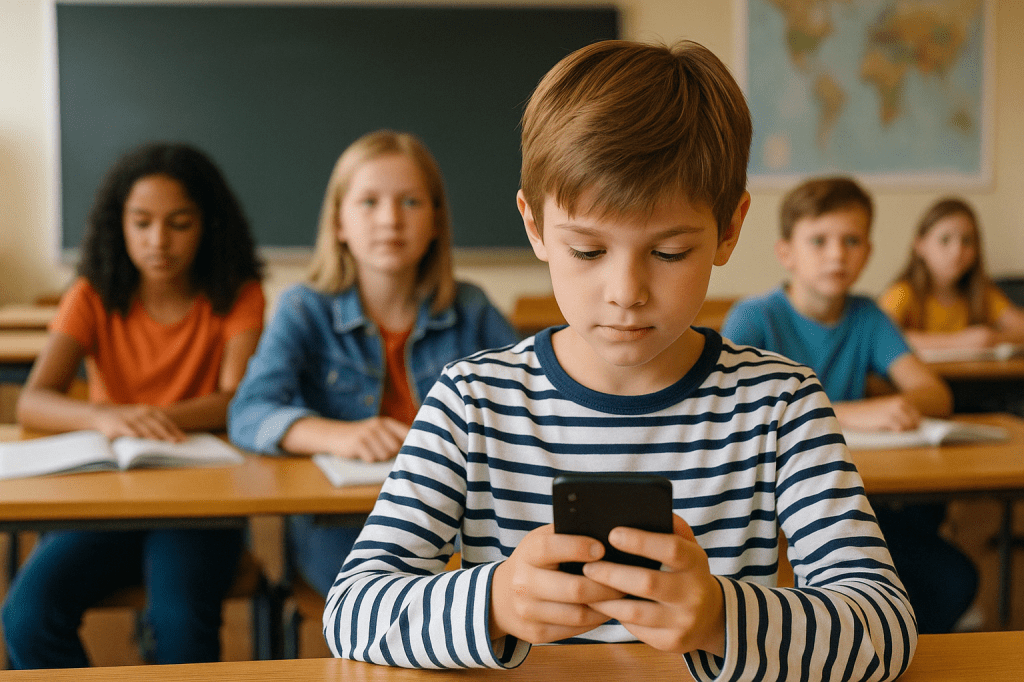
  • Technology in learning: Technology is a POWERFUL tool (AI is evolving and changing the way we do things every single day. I used AI to generate the image for this blog). Students should use technology in school. But, as educators, we have to help them use it the right way. Students MUST engage in the arduous writing process in order to reap the learning benefits associated with writing. 

Any other common learning misconceptions come to mind? Let me now! 

The “Kennedy Korner!”

It’s INSANE how much the world of education has changed since I last shared a blog post.  I posted my last blog on November 23, 2019.  That was more than two years ago (I’ve been busy…)!  So much has happened since then!  By “so much,” I MOSTLY mean that a global pandemic upended the way we operate.  If you think about it, since March 13, 2020, the world of education hasn’t been and will never be the same again. 

Since that day, in the field of education, we initiated Remote Learning/E-Learning/Virtual Learning (whatever you’d like to call it).  We’ve had virtual meetings and digital professional developments.  We’ve filmed ourselves teaching countless lessons and reading a plethora of books to our students.  We’ve conducted school-wide drive-by parades and other events to help build connections between school and the community.  We’ve even hosted graduation ceremonies via Zoom.  We’ve done a lot to ensure students are still learning socially AND academically while at home during a pandemic. 

Since that day, students and families have obviously experienced a lot as well.  Students and families have faced unprecedented levels of uncertainty and financial stress stemming from unexpected job loss/unemployment.  As a result of the pandemic and subsequent unemployment/financial stress, they’ve contended with increased mobility.  They’ve dealt with unforeseen deaths in the family and sickness/health concerns.  They’ve grappled with increased levels of depression as a result of extended isolation.  Students, in particular, have experienced elevated levels of anxiety to the point where many medical professionals are now recommending anxiety screenings for ALL students by the age of eight!

I think it’s safe to say that EVERYONE in the field of education has experienced a lot during this pandemic.  Unfortunately, it hasn’t stopped there.  We continue to adapt to these changes and experiences, even as we emerge from the pandemic.  While planning to bring ALL students back to in-person learning for the 2021-2022 school year, it was obvious there would be lingering issues and effects from the pandemic.  I knew that one of those issues would be heavily multifaceted; the serious lack of social interactions.  The facets of that SINGLE issue are as follows (not an exhaustive list):

  • Students not knowing how to properly and safely interact with one another
  • Diminished problem-solving skills, especially in social settings
  • A decrease in communication skills
  • Increased levels of social anxiety and a loss of coping strategies
  • Increased instances of trauma resulting in elevated levels of anxiety and other issues

In August, we welcomed students back to full, in-person schooling. These students have gaps in BOTH academic AND social learning.  Personally, I was and still am more concerned with the gaps in social learning.  That’s not to say that I’m unconcerned with their academic learning loss since the onset of the pandemic.  I am.  However, I firmly believe that, unless we FIRST address the social learning loss and the lingering effects from social learning loss, we will have a harder time addressing the academic learning loss. 

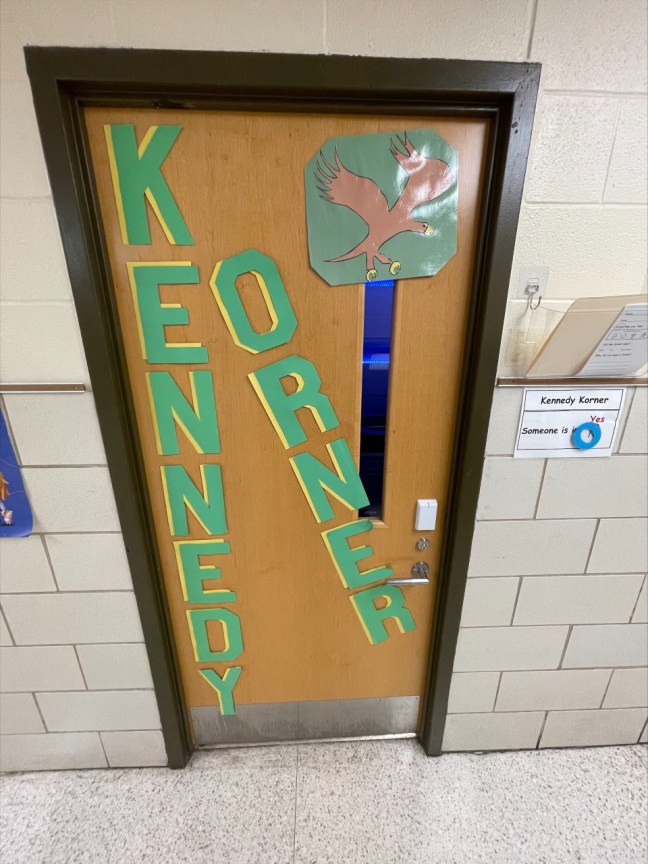
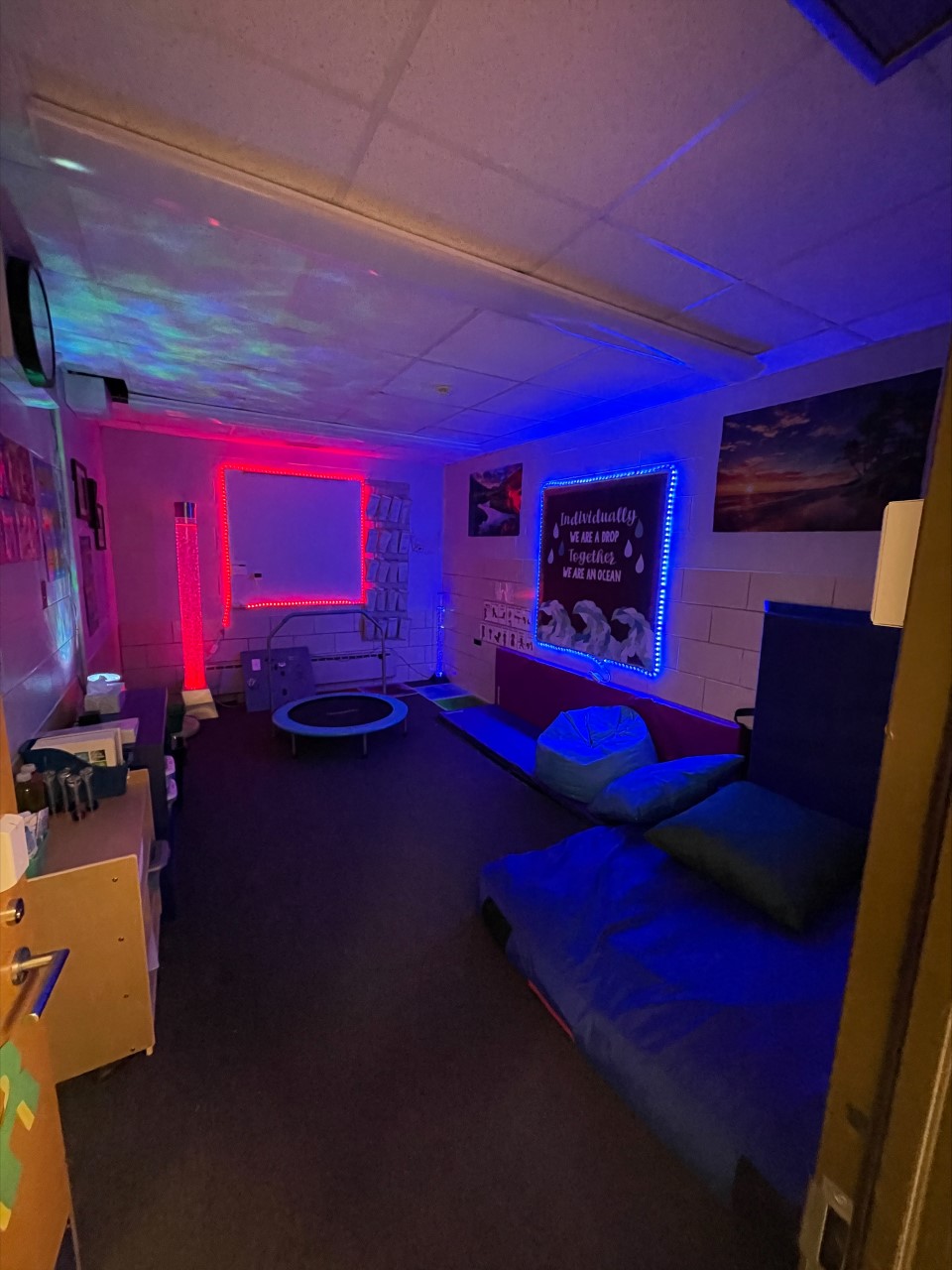
At Kennedy School, members of my special education department and I decided to focus particularly on trauma and anxiety resulting from the pandemic and isolation.  One way we’re helping students process their anxiety and trauma is through the opening and implementation of our “Kennedy Korner.”  Essentially, the Kennedy Korner is a calming space where students can go to de-escalate, refocus, and re-center.  It’s a place in our school where students go when they feel stressed/anxious/scared/nervous/tired/frustrated/etc.  The Kennedy Korner is full of resources such as fidgets, breathing balls, social stories, zones of regulation visuals, yoga mats and instructions, informational brochures, special lighting, calming music, a trampoline, and a crash pad.  When students enter the Kennedy Korner, a dedicated educator assists them with processing their feelings and using the resources in the room.  So far, it’s been a hit!  Students AND staff love this room!  I use this room REGULARLY to help alleviate some of my own anxiety! 

Moving forward, I’m excited to continue providing students with resources and supports they need to process their anxiety and other emotions.  I think these are important steps as we educate students post-pandemic.  What kind of innovative things are you doing to support students post-pandemic? Like, comment, share away!

Tying Teacher Evaluation to Student Test Scores: The Ongoing Debate

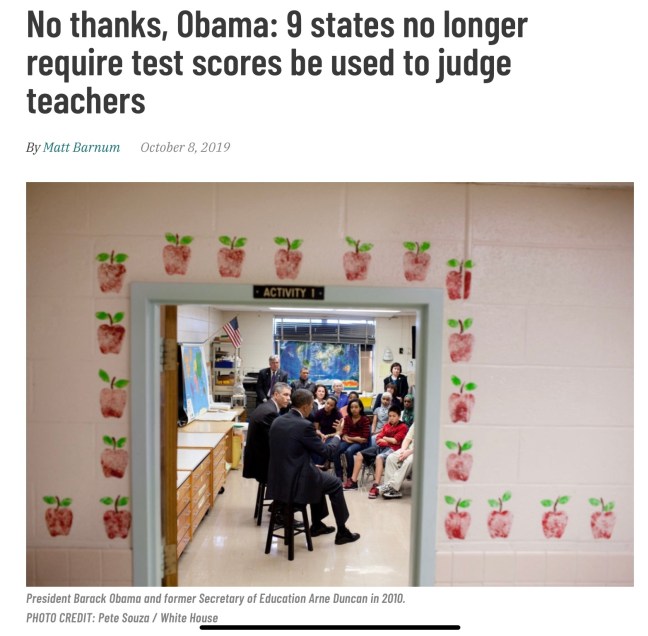
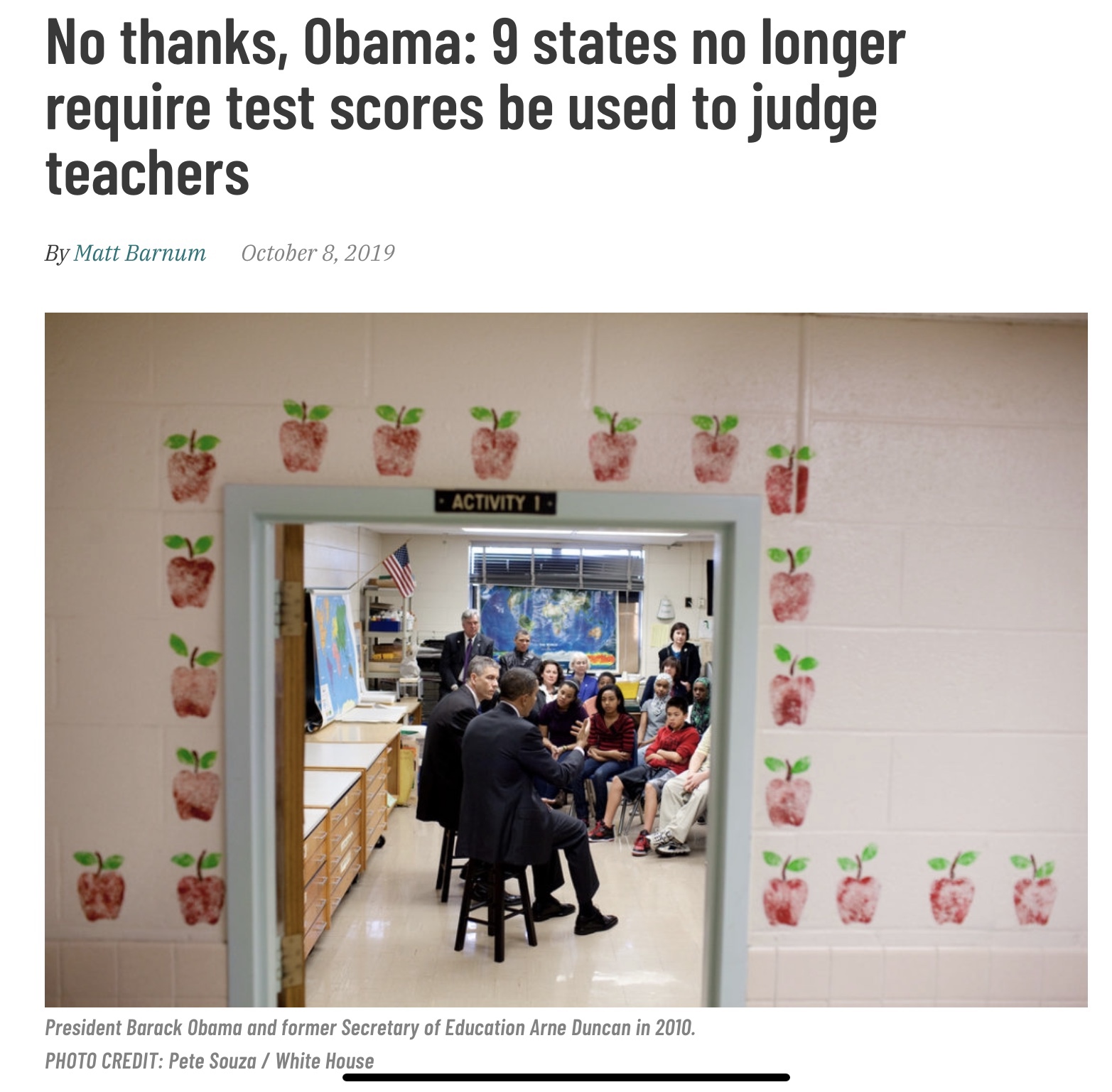
Interestingly, fewer states are including student test scores in their teacher evaluation calculations. As of October 2019, 34 states will use student test scores while calculating teacher effectiveness, compared to 43 states in 2015 (read more here).

In addition to reading the aforementioned article, I recently engaged in a conversation with an advocate of using student test scores to calculate teacher effectiveness. I’m always amused when people say that educators need to be held accountable in similar ways to other professions (ie. The business world). These advocates want some means of measuring teacher effectiveness (as do we all), and equate students to “products” that are churned out at the end of the year. Obviously, we know that human beings are not “products” churned out on a factory belt. But, I’m always perplexed by these proponents. What I find most perplexing is that, the grand majority of the time, people touting/proposing/enacting these kinds of proposals:

    Are not teachers
    Have never been teachers
    Have no experience in PUBLIC education
    Have NO certification in education
    Run some kind of educational “philanthropy”
    See improving education as their “crusade”

I’m no statistician, but neither are many advocates for these types of reforms. I don’t understand how any teacher evaluation system could accurately account for all the variables that vastly impact student achievement (over which educators have MINIMAL TO ZERO control), including but not limited to (just to name a few of the big ones):

  • Poverty
  • Hunger
  • Homelessness
  • Family Mobility
  • Single-Parent Households
  • Parents’ Academic History/Ability
  • Diet
  • Physical Activity/Physical Health
  • Mental Health

I’ve heard that professors at prestigious universities have been trying to quantify and control for these almost uncontrollable variables since the release of “A Nation At Risk” in 1983 (with minimal to no success). I’ve read about researchers developing ridiculous formulas to try and control for outside-of-school factors and then incorporating these formulas into teacher evaluation along with student performance. In terms of actually improving student achievement by tying student achievement to teacher evaluation, the data are inconclusive. Of course, I contend that the reason for this is that these types of evaluation systems do nothing to address the underlying symptoms of student academic performance, or lack there of. “Efforts to improve educational outcomes in schools, attempting to drive change through test-based accountability, are unlikely to succeed unless accompanied by policies to address the out-of-school factors that negatively affect large numbers of our nations’ students” (Berliner, 2015).

Don’t misunderstand me….

• Students should ALWAYS be showing growth

• Teacher evaluation should encompass some type of measurable/quantified measure

I’m NOT saying that because of the issues mentioned above, we should not hold educators accountable. I’m NOT saying that we as educators can’t do things in order to ameliorate some of these underlying issues. THAT’S NOT WHAT I’M SAYING AT ALL. In fact, much research exists that posits, yes, these out-of-school factors exist, but here are things we can do in our classrooms to help. I am saying that teacher evaluation systems that include student performance as a measure of teacher effectiveness will always be seriously flawed.

I’m interested to see how this trend continues. Clearly, the government plays a major role in these types of educational reform initiatives. Thus, I would say that, unfortunately, future evaluation changes will be the result of a continuously changing and volatile political climate.

Like/comment/share!

How Do You Refuel?

We’re in it, now… It’s “that time of year.” I like to call this time of year, particularly, the month of October, “Shocktober.” Shocktober is followed by “Blovember.” I’m sure you can figure out why that is.

At this point in the school year, we’re all coming to the realization that the school year has indeed started, and we’re working our way into the second quarter. For many, that beginning-of-the-year excitement, the buzz that circulates the school as we get our classrooms/offices ready is starting to wane. Also, not sure if you’ve noticed, but the days are getting shorter. It’s PITCH BLACK out in the mornings. Soon enough, we’ll be driving to work in the dark, and driving home from work in the dark. All of which is pretty depressing. Welcome to Shocktober!

Then, after Halloween passes, we enter Blovember. Maybe you’ve noticed this phenomenon as well. November flies by. With all the school events, parent/teacher conference preparations, and fall break/Thanksgiving Break, November just BLOWS by!

All that being said, I’m trying to think about all the ways I stay motivated during these particularly difficult/trying/crazy months of the school year. For me, in order to maintain balance and motivation, I MUST spend time with family and friends (and my dog!), exercise, eat healthy, make/play music, read (for fun and for work), see movies, and make/enjoy art. All these strategies help me stay fueled up and keep going for my students, teachers, and parents.

I just I realized another strategy that helps me stay fueled up, and it may be one of the most beneficial strategies: connecting with the people who inspire me. While at an educational conference today, I got to see so many familiar faces and meet so many new ones. Yet, the biggest impact came when I ran into my high school Spanish teacher, Mr. Rockaitis! At first, I couldn’t believe it was him! He teaches way up north. What would he be doing at this conference “down south?” But, he reminded me that he lives in the city, which wasn’t too far away. We chatted for a bit. He introduced me to some of his colleagues. I found myself giving him advice on a doctoral program. DEFINITELY never thought I’d be giving Mr. Rockaitis advice! Overall, running into Mr. Rockaitis reminded me of my “why.” I mean, this educator hit me at my core. Besides my Mom, he was the biggest influence on me deciding to become a teacher. His passion for learning and for teaching was contagious. He spread that passion to many, including myself. Though our reconnection was brief, it reminded me of my purpose. It reenergized me. It brought clarity.

As we get to this point in the school year, I think it’s important to remember, this is not a sprint, it’s a marathon. Stay fueled up. We still got a ways to go.

How do you refuel? Like/comment/share!

This School Year, Prioritize Teacher Clarity to Maximize Student Learning

I heard an awesome quote today… “Clarity is the antidote to anxiety.” I can truly attest to the accuracy of this quote. We all want clarity in our lives. Guess what? Students really want clarity as well, especially in school and in class.

In regards to John Hattie’s influences and effect sizes, you can’t focus on any other influences or effects without first addressing teacher clarity. You can’t have effective teacher feedback with students without first addressing teacher clarity. You won’t have solid RtI practices for students without first addressing teacher clarity. Teaching practices such as direct instruction and reciprocal teaching will not be successful for students without first addressing teacher clarity.

Feedback has an effect size of .7. RtI has an effect size of 1.29. Reciprocal teaching has an effect size of .74. Direct instruction has an effect size of .60. Those are all solid effect sizes. However, remember… you must first prioritize teacher clarity (effect size of .8) in order to reap the benefits of any of those teacher practices. Clarity is paramount.

One way to focus on enhancing teacher clarity is through the clear and consistent utilization of Learning Intentions and Success Criteria. Learning Intentions are general statements about what we intend our students to learn. Success Criteria let us know if the desired learning (learning intentions) have been successfully or unsuccessfully achieved. Success Criteria help students understand what their work should include.

Sounds easy enough. And, many think, “I’m already doing this with my ‘learning objectives’/’learning targets’ and ‘I Can’ statements.” I don’t deny this. However, it’s the refinement that’s important. It’s the consistency that’s important. It’s more than simply posting these targets, objectives, or intentions.

In my own practice as an administrator, I’m also going to work to provide clarity from my standpoint as well. This will certainly help teachers, students, parents, and community members.

How do you work to improve and increase teacher clarity?

Like/Comment/Share!

Celebrities And Their Social Media Blunders: What Are We Teaching Our Young Ones?

Roseanne Barr, Samantha Bee, Lena Dunham, Kathy Griffin, Azealia Banks, Josh Rivers (I’m sure there are more). All these people have one interesting thing in common: they’ve recently used a social media platform to discuss/gripe/complain/assert/share questionable (or flat out disparaging/racist/rude/sexist/etc.) information to copious amounts of people. Consequently, as a result of their online behavior, many of them have issued public apologies, retracted some of their statements, and/or are seeking redemption.

Sure, we see these people in positions of power (it’s not just celebrities) also receiving consequences for their actions. This may demonstrate for children that there are consequences associated with our behaviors. However, the consequences are very reactionary. For the victims, the damage has already been done. Point being, these people in power, with huge social media followings, should never be saying or doing these things to begin with. Our children are witnessing these people in power display this kind of behavior regularly. They see it on TV, they hear it on the radio, they see it on various forms of social media or on the internet, they hear about it from their peers/parents, etc.

As educators, I see it as our responsibility to combat these negative influences and take a more proactive approach to this issue. I’m no expert in digital citizenship. But, based on my limited understanding of the concept, it sounds like it should be an essential part of the curriculum as we continue growing and developing in the digital age. I mean, just based on some of the digital citizenship elements, descriptions, and goals, it’s quite apparent that schools should emphasize:

  • Digital communication – helping students understand the plethora of communication mediums and the standards and responsibilities associated with each medium.
  • Digital etiquette – helping students grasp the notion that various mediums require standards of etiquette. The etiquette of these mediums includes appropriate behavior and language.
  • Digital rights and responsibilities – helping students understand that, yes, they have access to platforms that have the potential to reach thousands of people online. But, with this power comes immense responsibility. Children need to demonstrate responsibility when engaging in online communities.
  • Digital footprint – helping students understand that information exists about them on the internet as a result of their online activity.

Overall, we need to inculcate our children with the necessary knowledge and skills to successfully navigate the precarious terrain that is the online world. They must be able to demonstrate responsibility, empathy, restraint, good decision-making, caution, control, and respect (just to name a few).  I see digital citizenship curricula as a way to help us accomplish that goal.  In a time when narrowing the curriculum is so pervasive, this may sound like I’m asking a lot.  Yet, I truly believe we must educate our children so that they can survive and thrive in the digital world.

Like/Comment/Share! What are your thoughts on the recent celebrity/people in positions of power social media blunders? What should we do about it to help our students? Does your school have digital citizenship curriculum?  If so, how is it structured?  When do you fit it in?  Let me know!

The Culmination of Another School Year

Woah! My district has 7 official school days left. But, the end of the school year has been a whirlwind! There are so many events both inside of school and after school! I don’t know if I’m coming or going!

Though the end of the year breeds chaos (organized chaos, mostly!), I always wonder the following at this crazy time:

  • It’s essential that we as teachers and teacher leaders continue learning and developing our craft. For many, summer is the best time for that continued professional development.
    • How do you encourage your staff/team to engage in professional learning during the summer?
  • What are some ways you celebrate the culmination of another school year (both with staff and students)?
    • I’m not saying learning should stop. But, I am saying that it’s essential to look back on the year, dialogue about goals met/not met, celebrate successes, analyze failures or obstacles, and plan for the future.
  • Some teachers take summer very seriously (for good reason). I’ve heard about some in the field of education who don’t check the work email for an entire three months!
    • How do you tactfully connect with your team over the summer (so as to not invade privacy or disturb their time with family)?
  • As leaders, it’s also important for us to take a step back and relax over the summer. I’m not very good at maintaining that work/life balance.
    • How do you disconnect and recharge over the summer?

Like/Comment/Share! I’d love to hear from you!

Distributive Leadership: Why It’s Essential in Schools and Districts

We all have different leadership styles. Some leaders employ a transactional leadership style that is very business-oriented, where goods and/or services are exchanged for money (paycheck). Some leaders utilize a bureaucratic leadership style by ensuring people follow the rules and always complete tasks by the book. Other leaders may use a laissez-faire leadership style where the workplace is characterized by a “let them do/let it be” or “hands-off” approach. Others embrace a transformational style that inspires staff through effective communication strategies and helps create an intellectually stimulating environment. There are numerous more leadership styles. I’ve seen entire books dedicated to defining each leadership style, and then proclaiming to help individuals develop the style that best suits them.

Whatever your leadership style or take on leadership itself, I believe that if we conceptualize leadership as being confined only to those in “leadership” or “authority” roles, not only are we overlooking the potential leaders and leadership capabilities of the many people within our buildings, we are overburdening ourselves as administrators and teachers. It’s no secret. We can’t do it all. And, to be honest, we shouldn’t have to. Like the old adages say, “two heads are better than one” or “it takes a village.” When optimal conditions exist (minimize opportunities for group think, norms for collaboration have been established and modeled, a clear purpose has been established, people are working together for the betterment of children, etc.) the more people working together collaboratively to generate solutions, the better.

I’ve heard of democratic leadership and shared leadership styles that encourage teams to share ideas and input together before making a final decision. I utilize these approaches daily. But, recently, I read about Distributive Leadership. Distributive leadership emphasizes maximizing leadership expertise at all levels to build widespread capacity throughout an organization. It also holds that no one person at the top makes all the decisions. For example, in schools, teachers are empowered to run/operate crucial aspects of a school, such as admissions, scheduling, professional development, and new teacher training and mentoring. Research suggests that one of the main differences between high performing and low performing schools is often attributed to varying degrees of leadership distribution. High performing schools often distribute leadership widely throughout the building.

Personally, I like its focus on interdependent interaction, ownership, and empowerment. I believe teachers should be empowered and encouraged to make the decisions that will impact them and their students most. As a leader, it’s my job to listen to my teachers and include them as we endeavor to improve all our practices. Most importantly, I must trust my teachers and not shy away at the first sign of bumps in the road.

What leadership style do you employ? What leadership style does your administration/manager/boss/etc. utilize? What leadership style do you think works best? Under what leadership style would you enjoy working most?

Like/Comment/Share!

Illinois Getting Rid of PARCC Tests… Can We Broaden the Curriculum and Focus on Performance-Based Assessments Now?

Illinois may be getting rid of PARCC (other states already have). For some, this is no surprise. Secondary educators lambasted PARCC testing and the tests were eventually removed from the high school setting. Others saw PARCC as another cyclical education reform that just so happened to bring about new types of assessments (“computer-based,” oh my!). PARCC replaced state-standardized tests like ISAT, which replaced IGAP and on down the road since the doom and gloom proclamations in 1983’s A Nation at Risk.

Obviously, in our test-based accountability system, PARCC will be replaced with something else. We’ve heard that the new tests may be shorter, allowing for teachers/administrators/districts to receive the results in an expeditious manner. What is more, it’s possible that the new tests will be adaptive in that test will adjust the difficulty of the questions based on student responses (similar to NWEA’s MAP assessments).

However, it’s my view that these changes aren’t enough. Sure, shorter tests will be good for teachers and students. Teachers and parents have decried that students are over assessed for years. Sure, more expeditious feedback is good. That’s always been one of the major drawbacks of these state-standardized tests. Sure, adaptive tests that adjust according to student responses could be a good thing, if this helps us better identify student deficiencies.

Yet, I’m not sure any of these adjustments will address a pressing issue facing all schools, but especially schools serving disadvantaged communities: narrowing of the curriculum. If these tests are tied to any federal funding (like what happened with Obama’s Race to the Top initiative), there will continue to be narrowing of the curriculum. If these test are used to evaluate, rate, and/or compare schools and districts, there will continue to be narrowing of the curriculum. If districts prioritize these tests and the data generated by them, there will continue to be narrowing of the curriculum. Point being, it’s a different means to the same end. We may have new tests on the horizon. But, the accountability movement/reform in education is still alive and well. When state-standardized test scores are used to evaluate schools/districts/teachers, narrowing of the curriculum will continue to occur.

What is more, as past research has shown, these state-standardized tests only assess low-level thinking skills, numb teacher and student creativity, and prepare students to take tests rather than to think critically and solve real-world problems. With more standardized tests, even though they’ve been shortened and allow teachers to receive feedback in a timely manner, I’m guessing we’ll still have tests that assess low-level thinking skills, decrease creativity, and don’t accurately show all that a student really knows.

I’ve always been an advocate of performance-based assessments, which challenge students to use higher-order thinking in order to create a product or complete a process. The essential components of performance-based assessments help to ensure complexity and higher-order thinking: relevant, real-world oriented, open-ended, time-bound, products presented to an authentic audience, embedded formative assessment and feedback.

Performance-based assessments are not new. In fact, they’ve been around in some form or another since the days of John Dewey. However, when accountability reforms increased the pressure facing today’s schools, we moved away from performance-based measures of learning to standardized measures. This pressure also forced the narrowing of the curriculum. Thus, I (and many others) appeal to our legislators and education policy makers to truly consider what’s best for our students, for our teachers, and for our schools. When moving forward with new state-standardized testing, we must consider all that we’ve learned from the pressures associated with these tests.

Like/Comment/Share! Help raise awareness about this issue!